
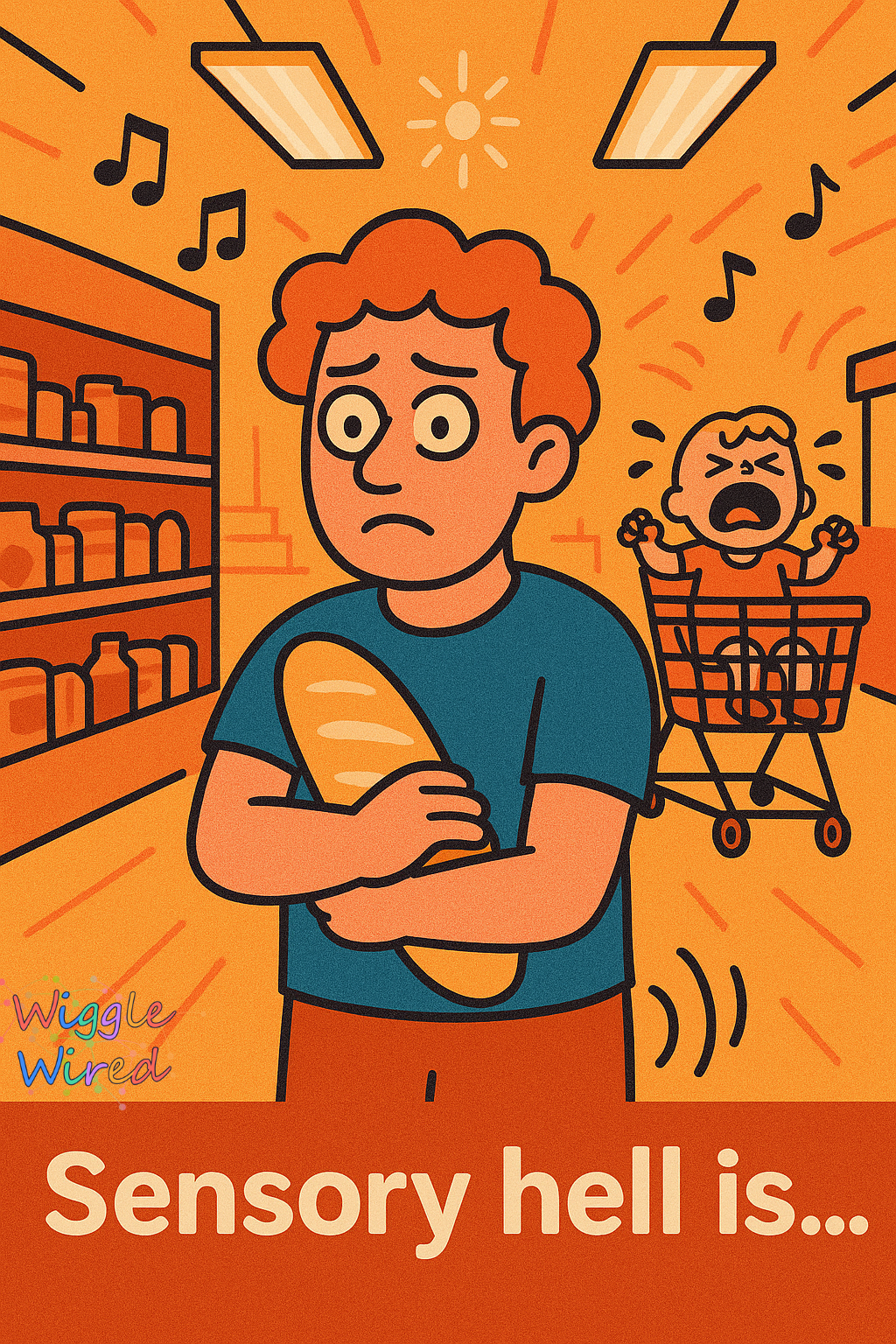
Sensory hell is…
You came for bread.
You’re leaving with your fight-or-flight fully activated.
Picture this:
- Fluorescent lights buzzing overhead
- Music turned up just a bit too loud
- A squeaky cart wheel that never stops
- Someone’s toddler crying in aisle 5
- The overwhelming smell of the bakery section mixing with the cleaning products aisle
For some people, this is a mildly irritating shopping trip.
For a lot of neurodivergent people, it’s sensory overload.
Why It Hits So Hard
Neurodivergent sensory systems often process the world differently.
We might hear every hum, every clang, every overlapping voice all at once, with no volume control.
We might feel light glare like a physical pressure, or catch the whiff of six different smells layered on top of each other.
Our nervous system isn’t just “noticing” these things, it’s reacting to them as if they’re urgent threats. Which means our body starts going into fight-or-flight mode before we’ve even made it to the checkout.
It’s Not Just Being “Sensitive”
Sensory overload is not about being picky, overdramatic, or needing to “toughen up.”
It’s about our brain receiving too much information at once and not having the bandwidth to filter it.
When the senses go into overdrive, it’s hard to think clearly, make decisions, or even remember what we came in for. Which is why “just running to the store” can leave us drained for the rest of the day.
Coping Strategies (That Sometimes Help)
- Earplugs or noise-cancelling headphones to cut down on auditory chaos
- Sunglasses or a brimmed hat to reduce harsh lighting
- Short trips or delivery to avoid peak sensory times
- Having a list to minimize decision fatigue in the moment
And maybe most importantly: dropping the guilt.
Avoiding a sensory overload trigger isn’t “being weak,” it’s protecting your mental and physical well-being.
You’re Not Alone
If you’ve ever left a store feeling shaky, irritable, or on the verge of tears after “just” picking up groceries, you’re not overreacting. Your experience is real.
We see you, earplug-wearers, online orderers, and grocery sprinters.
You’re not broken. You’re navigating a world that wasn’t designed with your sensory needs in mind.